
Leather is associated with every premium bag, yet most people feel unsure when they decide which leather offers the best mix of beauty, strength, and long life.
Many readers ask, “What type of leather is best for leather bags?” or “Which leather is best for purses and everyday carry bags?” The answer depends on texture, feel, durability, smell, personal values, lifestyle, and budget. Every leather grade tells a different story. Full-grain leather, Top-grain leather, Genuine leather, and Vegetable-tanned leather offer unique strengths. You also see materials like cowhide leather for bags, suede leather for bags, and rare exotic leather for bags
The question Which leather is best for bags? comes up every day in fashion stores, workshops, and online searches. People want the right bag, and the right bag always starts with the right leather. I write this guide from personal experience because I work with leather artisans, review leather products, and test different bag types in daily routines. My goal stays simple: create a clear, human, and helpful guide that people search for, understand easily, and update in the future without losing relevance.
When I choose leather for a bag, I look at strength, texture, age behavior, patina bloom, and overall feel. Some leathers age with grace. Some remain smooth for years. Some suit travel. Some suit office life. This guide gives real insight into the best leather for bags, how each leather type performs, and how it affects everyday use.
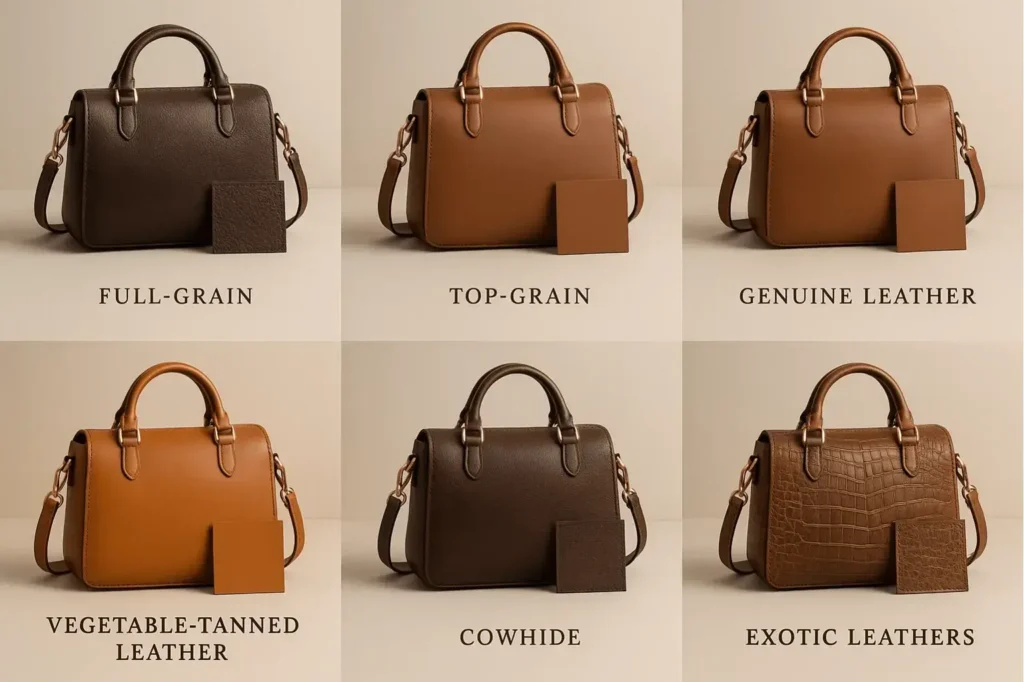
A clear choice starts with a clear view of leather types. People ask Which leather is best for bags? because every hide behaves in its own way. Some hides stay firm, some feel soft, some form patina, and some mark with ease. My own work with tanneries and craftsmen shows that a strong leather bag always begins with the right material. Below is a full guide to the types of leather for bags that stay relevant for fashion, work, and daily life.
Full-grain leather stands at the top. It comes from the upper layer of the hide with the natural grain intact. This means the surface stays untouched, strong, and true. I use full-grain hides for clients who want luxury, firmness, and long life. This grade also forms deep patina with time, so the bag grows character instead of losing strength.
Why full-grain leather suits bags:
People who want durable leather for everyday use always lean toward this grade.
Top-grain leather comes from the same layer as full-grain but with the top surface sanded for a smooth finish. My own experience shows that top-grain suits buyers who value neat and modern style. It stays slightly softer and more flexible than full-grain.
Why top-grain leather suits bags:
People who search Full-grain leather vs top-grain leather durability usually find that top-grain stands strong but forms less patina than full-grain.
Many buyers see genuine leather on labels and assume it means premium grade. In truth, genuine leather sits below full-grain and top-grain. It still comes from real hide but from lower layers with reduced fiber strength. I see many budget brands use it for low-cost production.
Why genuine leather suits some bags:
However, it does not stand heavy load or long travel as well as higher grades.
Vegetable-tanned leather uses tannins from tree bark and natural materials. This process produces a firm, earthy hide with a warm tone and deep scent. My work with vegetable-tanned hides shows that they form the most beautiful natural patina over years.
Why vegetable-tanned leather suits bags:
Most strong bags use cowhide leather for bags because cowhide carries natural durability and balanced softness. I recommend cowhide for men’s and women’s backpacks, briefcases, duffles, and totes.
Why cowhide suits bags:
It offers a balance of cost and longevity.
Suede leather for bags comes from the underside of the hide and offers a soft and velvet-like feel. Suede suits people who want style and elegance over raw strength.
Why suede suits bags:
It needs slightly more care, so suede fits people who value appearance and gentler use.
Exotic leather for bags uses hides like crocodile, ostrich, python, or rare skins. I handle exotic hides for premium projects where the focus is uniqueness, prestige, and long lifespan. Check out our detailed guides on exotic leathers and crocodile vs alligator leather for insider tips.
Why exotic leather suits bags:
It matches people who want rare pieces with high status value.
| Leather Type | Strength | Look | Patina | Best Use |
|---|---|---|---|---|
| Full-grain leather | Very high | Natural | Strong | Work bags, travel bags |
| Top-grain leather | High | Smooth | Medium | Handbags, office bags |
| Genuine leather | Medium | Basic | Low | Budget bags |
| Vegetable-tanned leather | Very high | Earthy | Rich | Heritage bags |
| Cowhide leather | High | Balanced | Medium | Backpacks, daily-use bags |
| Suede leather | Low | Soft | Minimal | Fashion bags |
| Exotic leather | Very high | Unique | Medium | Luxury handbags |
Quality levels determine leather bag longevity, surface strength, and resistance to scratches.
Full-grain lasts the longest. It resists tears and weather. It maintains shape, so it works well for travel bags and work bags.
Top-grain shows good durability while staying flexible. It offers better value for buyers who want luxury without full-grain pricing.
It lasts for short to mid-term use. For buyers who want bags for occasional use, this option works.
The right leather must match your lifestyle.
For high-quality leather for work bags, full-grain and top-grain remain the top picks. They stay strong under weight and daily pressure.
Leather for backpacks must resist stretch and pull. Cowhide full-grain stays ideal.
For best leather for travel bags, pick leather with strong fibers and high resistance. Full-grain keeps shape even under heavy packing.
When readers ask which leather is best for purses and everyday carry bags, top-grain and vegetable-tanned leather give the best balance of feel and lasting value.
For leather tote bag leather type, top-grain offers softness and shape, while veg-tan offers structure.
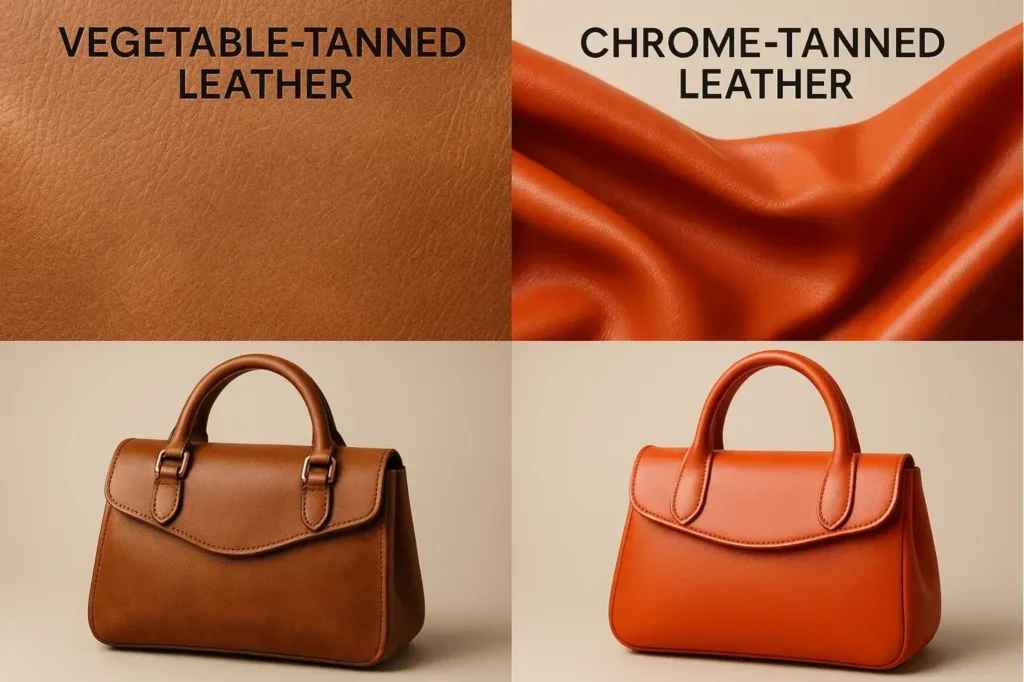
Tanning affects smell, color, and strength.
Creates warm tone and rich scent. Ideal for natural style fans.
Creates bright colors, smooth finish, and high flexibility. Works well for fashion bags.
Learn more in our chrome vs vegetable tanning guide.
Veg-tan ages well, while chrome-tan stays soft and colorful. Your pick depends on color needs and styling preference.
Buyers often ask, how to spot high-quality leather bags? Here are simple markers:
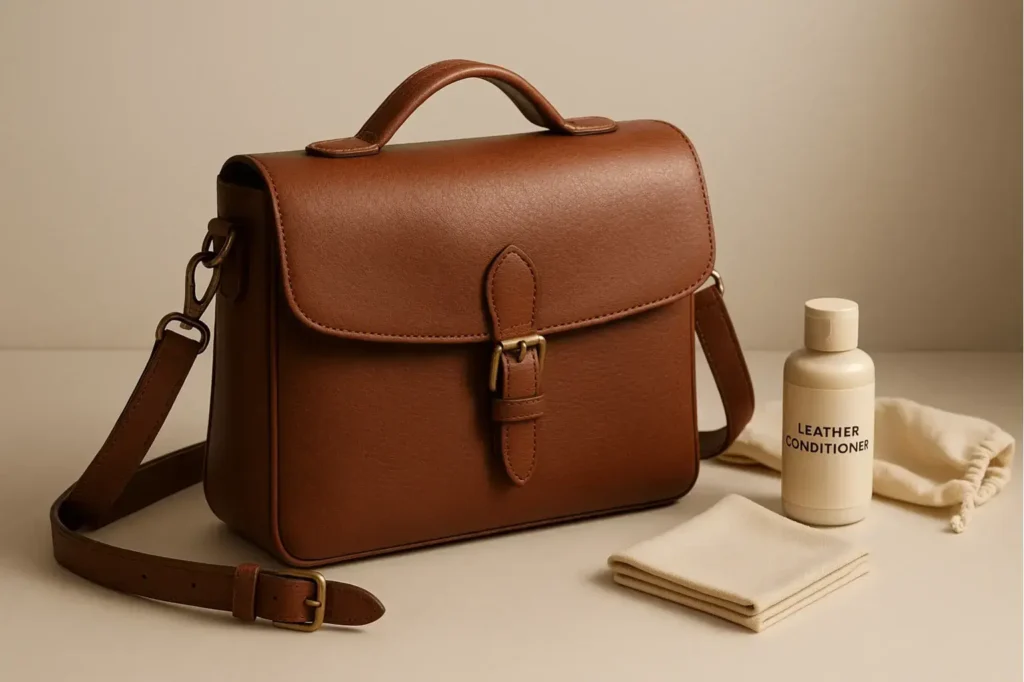
Proper care supports leather bag maintenance and extends life.
Basic Leather Care Tips
Scratch Resistance
Full-grain holds the best leather bag scratch resistance, while suede marks more easily.
Strength
Full-grain ranks highest, top-grain stays close, genuine stays basic.
Feel
Full-grain feels firm, top-grain feels smooth, genuine feels standard.
Patina
Full-grain shows the richest patina development in leather bags.
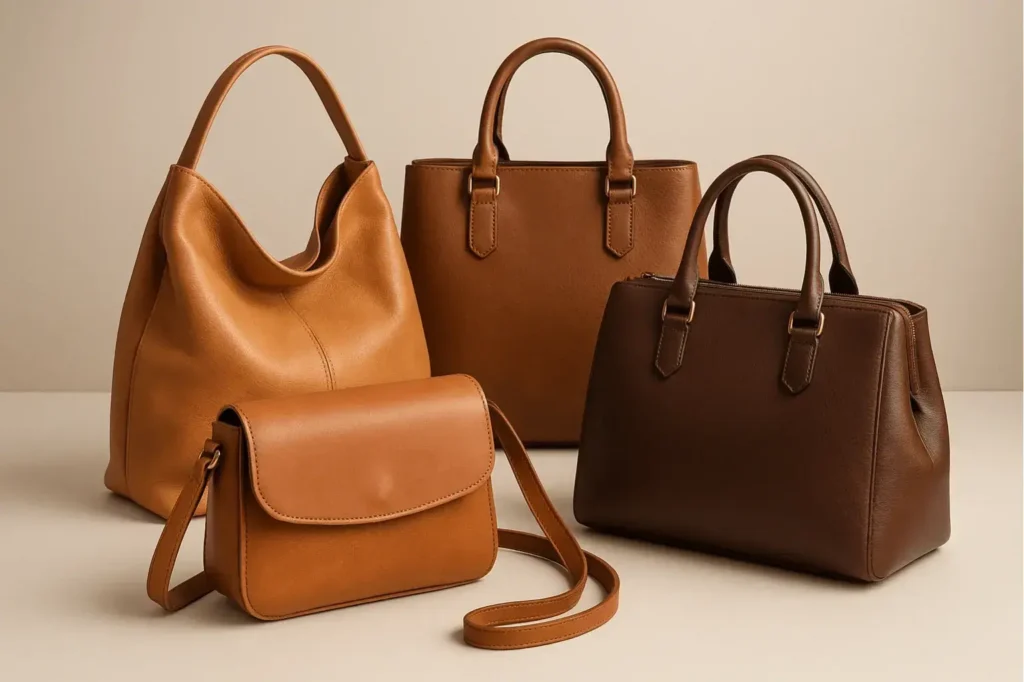
Current trends favor natural texture and soft structure.
Rise of Vegetable-Tanned Leather
People value natural tone and ethical methods.
Luxury Leather Handbags
Brands use full-grain and exotic leather for premium lines.
Soft vs Stiff Leather Bags
Soft bags appear in casual outfits, while stiff bags suit office wear.
Many buyers now look for ethical leather bags. Veg-tan supports eco-conscious buyers due to natural tanning. Cowhide, as a by-product of food production, also fits sustainable values.
Wrap up
In the end, a well-chosen and well-cared-for leather bag is a reliable companion. Use this guide and your own experience to pick leather that works best for you. The right leather, with proper care, will give you a bag that truly lasts.
Which leather is best for travel or work bags?
For travel or work bags, full-grain leather is the best choice due to its exceptional durability, quality, and ability to develop a rich patina over time.
How to spot high-quality leather?
Check for natural grain and a rich leather smell. Real full- or top-grain leather should feel warm and smell luxurious. Beware of generic genuine leather tags.
How do I care for my leather bag?
Clean it gently and condition it a few times a year. Store it properly and avoid harsh conditions. This keeps even older bags looking great.
What about ethical or vegan alternatives?
For ethical leather bags, choose vegetable-tanned hides and transparent sourcing. Vegan leathers exist, but often need replacement more often than real leather.
IsItRealLeather began with one goal: to defend and promote authentic leather in a world full of cheap substitutes. We’re not a brand or manufacturer—we are a community-driven resource backed by writers, leather crafters, and passionate consumers from around the world.
Sign up, you’ll love hearing from us. We promise!